
MVS-P6HD
Craniofacial design · CBCT import
High-frequency blue-light capture records facial geometry quickly and helps reduce motion-related artifacts, including in challenging environments.

A polarization camera helps control reflections and overexposure from tooth enamel, improving the capture of dental detail. Coordinated scanning components improve mesh and texture alignment for more consistent detail in the resulting 3D model.
Focused dental capture reduces 3D point spacing by up to 45%, helping record fine tooth structures with greater clarity.

The cephalometric analysis system automatically marks key facial landmarks, generates measurement data and exports a standard PDF report.

Import an external dental model, remove the original dentition mesh and replace it with the new model for personalized smile design.

Import CT DICOM data and align it with the facial scan to visualize the relationship between the lips, teeth and maxillofacial structures in 3D.
With DICOM imaging data, measure the distance from bone to facial soft tissue and quantify soft-tissue thickness. The 3D measurements help distinguish skeletal and soft-tissue features for aesthetic and maxillofacial planning.
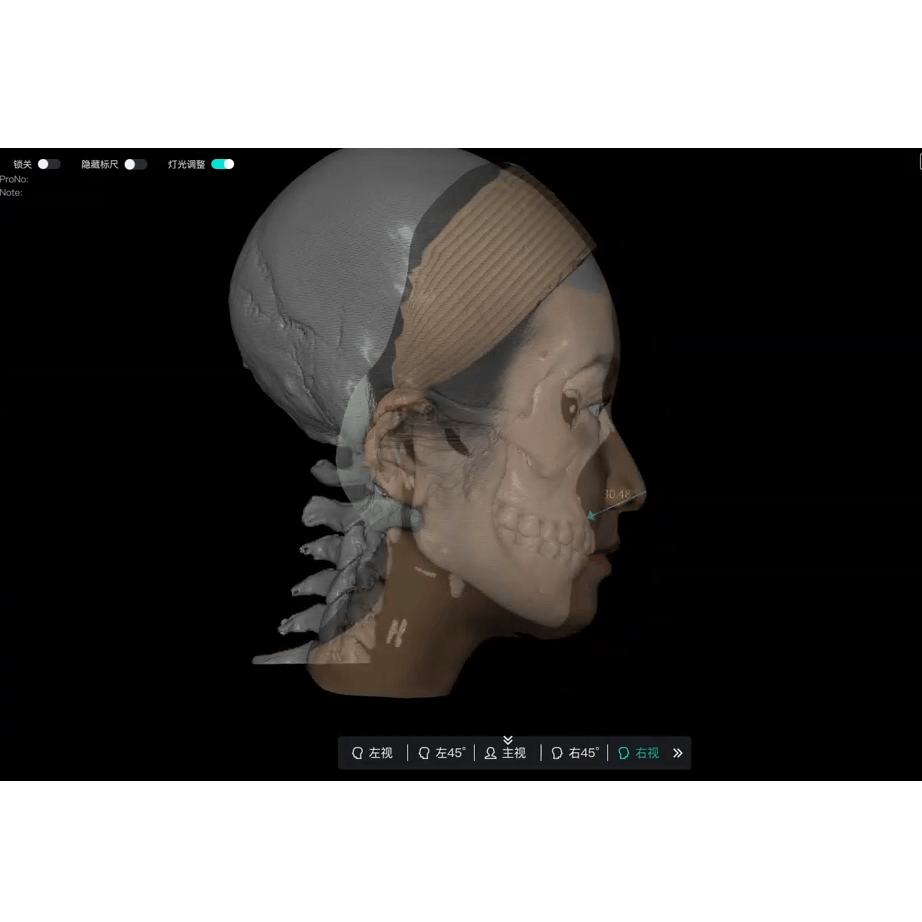
Simulate underbite and mandibular retrusion cases to visualize changes in occlusion and facial profile, supporting orthodontic and orthognathic treatment planning.
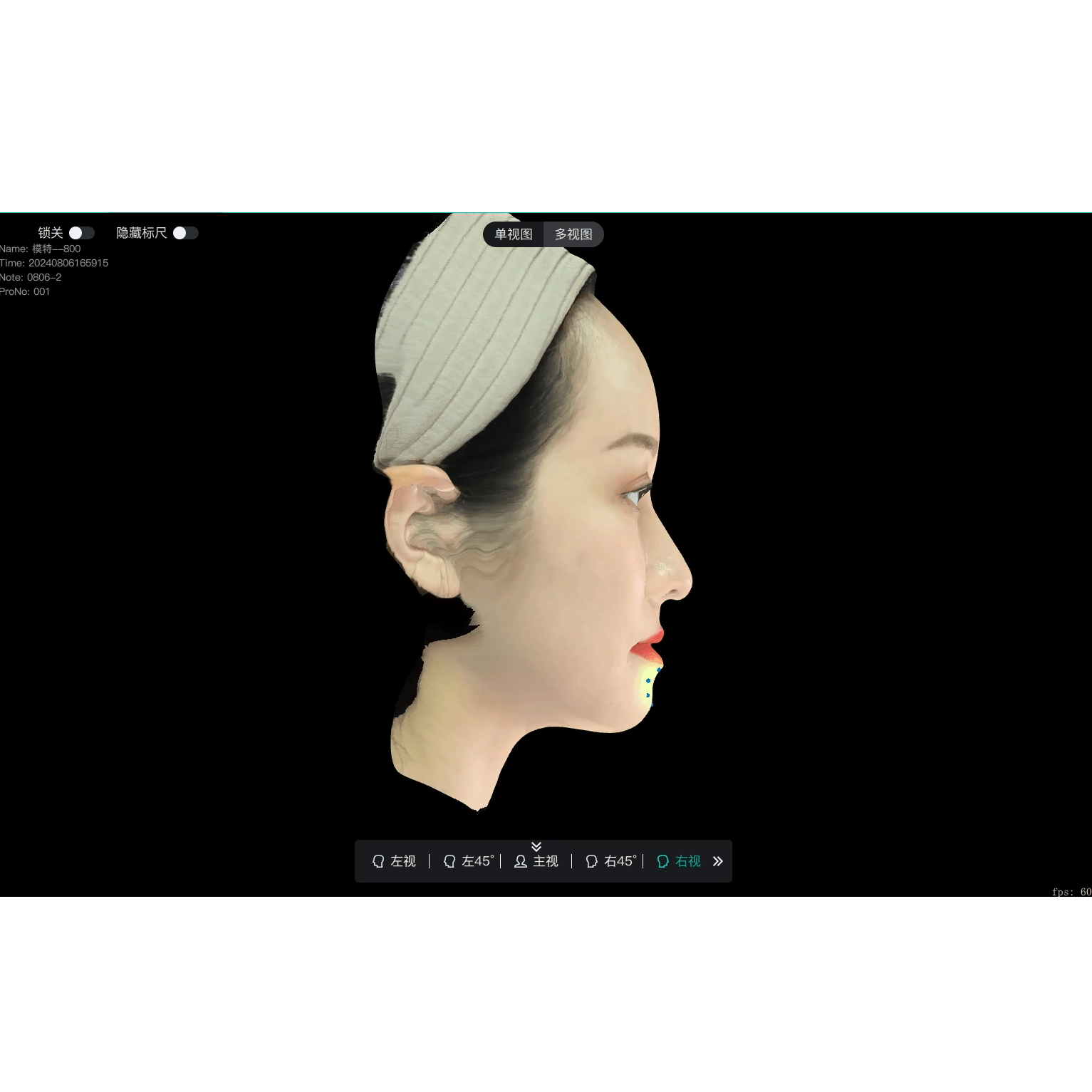
Import multiple scan or simulation models, switch between time points and compare data to review changes in facial soft-tissue shape.

Compare up to eight models side by side, review differences across a timeline, assess design options against the original model and track outcomes at different time points.

Trim facial scan models and export them in OBJ or STL format for use with intraoral and dental software, further analysis and post-processing.

Frequently Asked Questions
CASZM 3D digital systems support orthodontics, clear aligner workflows, oral and maxillofacial surgery, and dental restoration. They also provide 3D soft-tissue measurements for clinical review.
Options include MVS-C4D, MVS-P6HD, MVS-C6HD and MVS-M6HD, depending on the workflow. MVS-C4D supports 16 fps 4D motion capture, CBCT (DICOM) import, 3D cephalometric analysis and digital smile design; functions depend on model and software configuration.
Yes. It captures 3D facial and perioral data for digital smile design and simulation, supporting patient communication and restoration planning.
The system captures facial soft tissue in 3D and identifies key anatomical landmarks to support 3D cephalometric and facial morphology analysis alongside conventional imaging.
It quantifies soft-tissue changes before and after orthodontic or maxillofacial treatment, providing repeatable measurements for outcome review, treatment planning, and research.
The 3D data can be used in clear aligner planning and production workflows, including digital impressions, tooth arrangement simulation, and outcome visualization.


