
MVS-P6
Facial scanning · Precision flagship
High-precision 3D scanning measures facial contours and provides data for comparing treatment plans and quantitative clinical assessments.

Follow the marked floor position and wear the neck covering. The guided workflow supports efficient scanning and immediate model comparison.
A detailed mesh is generated from 0.05 mm 3D measurement accuracy. The system captures facial data, including the mandibular border, preauricular area and temples, for a complete model used in assessment.
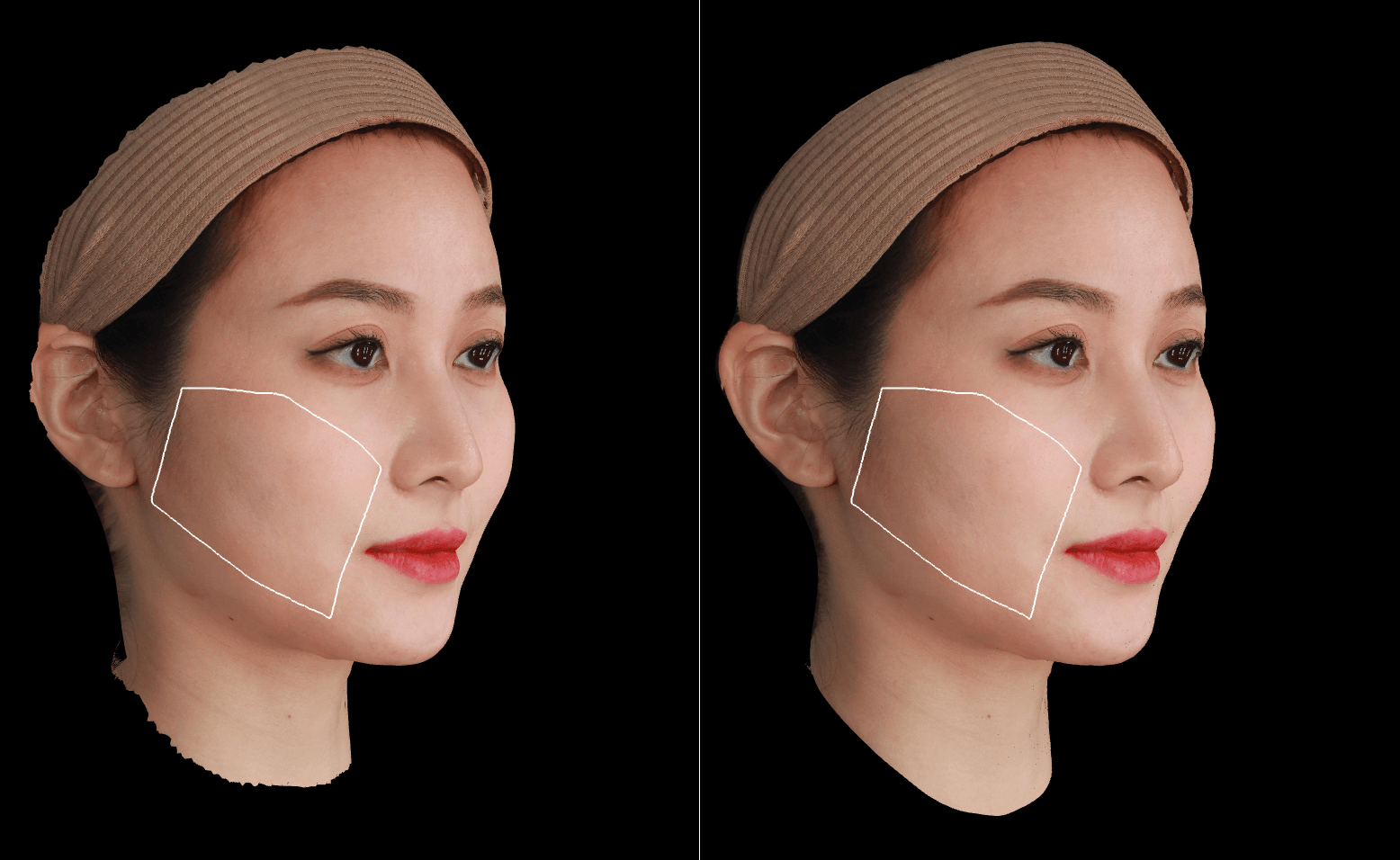
Select and save multiple treatment regions. Reuse the same regions during follow-up comparisons to reduce unrelated variation and support quantitative assessment.
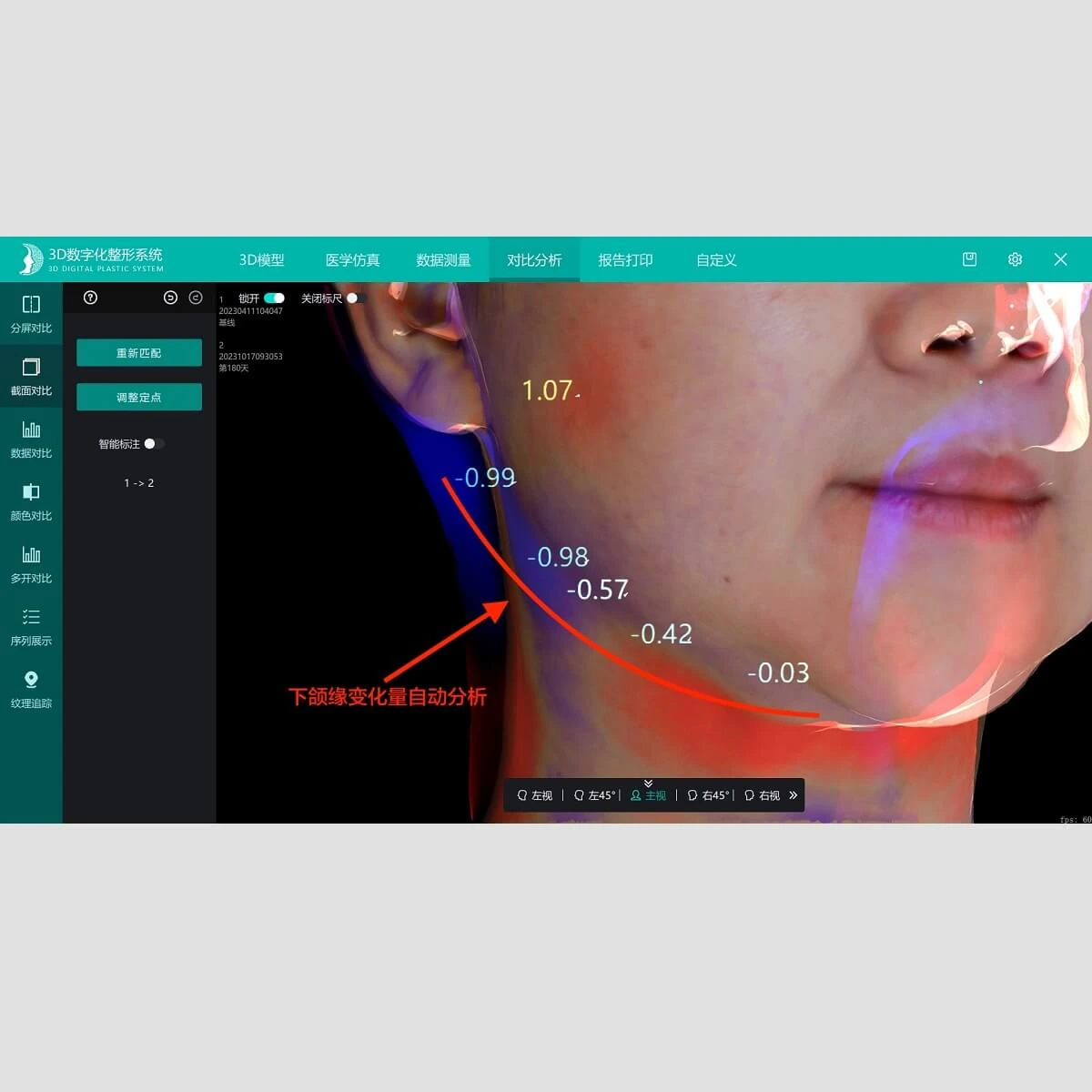
Automatic model registration supports point-by-point height comparison before and after treatment. Color coding shows differences, and point values can be viewed with the cursor.
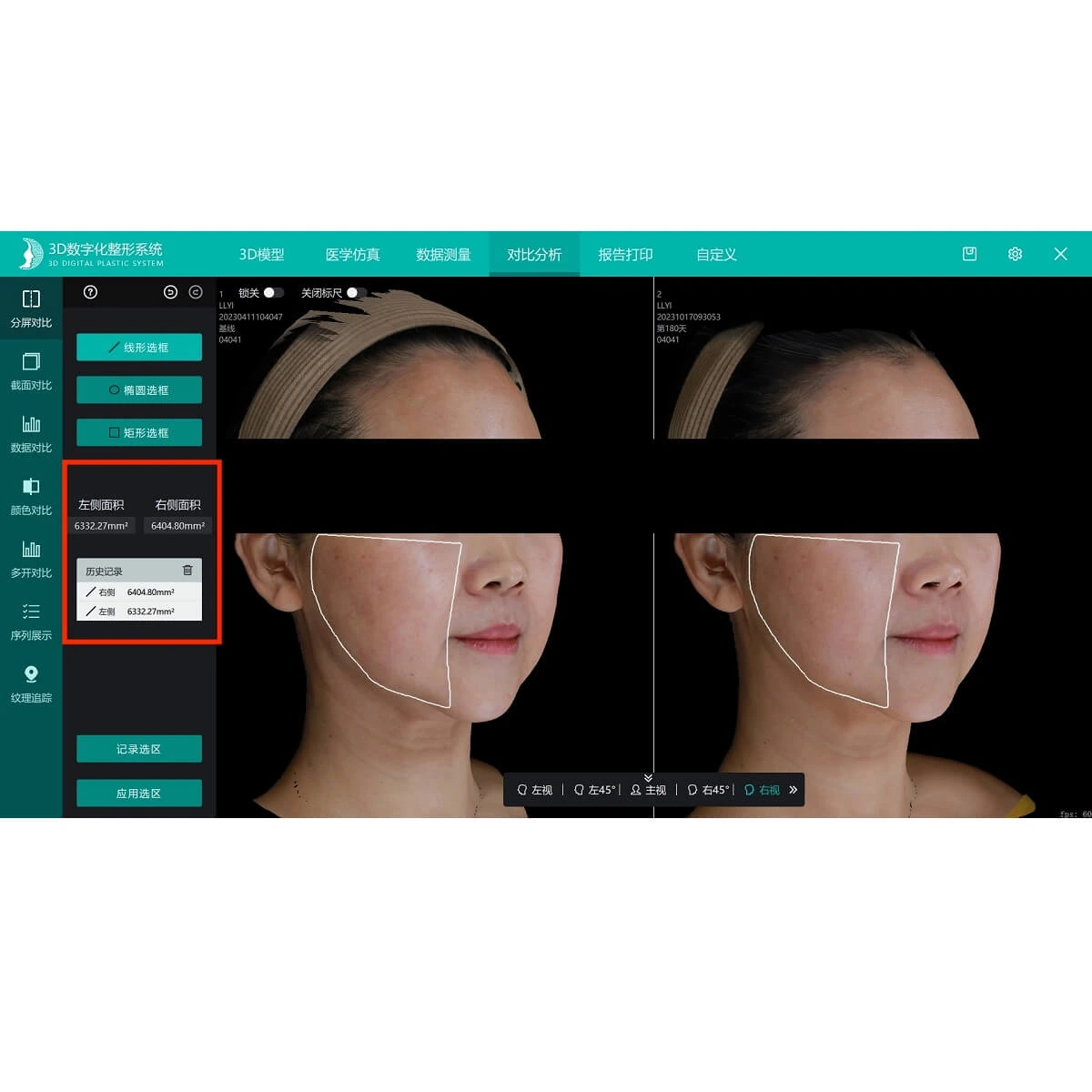
Select a treatment region on the pre-treatment model. The system maps it to the corresponding post-treatment area for area comparison.
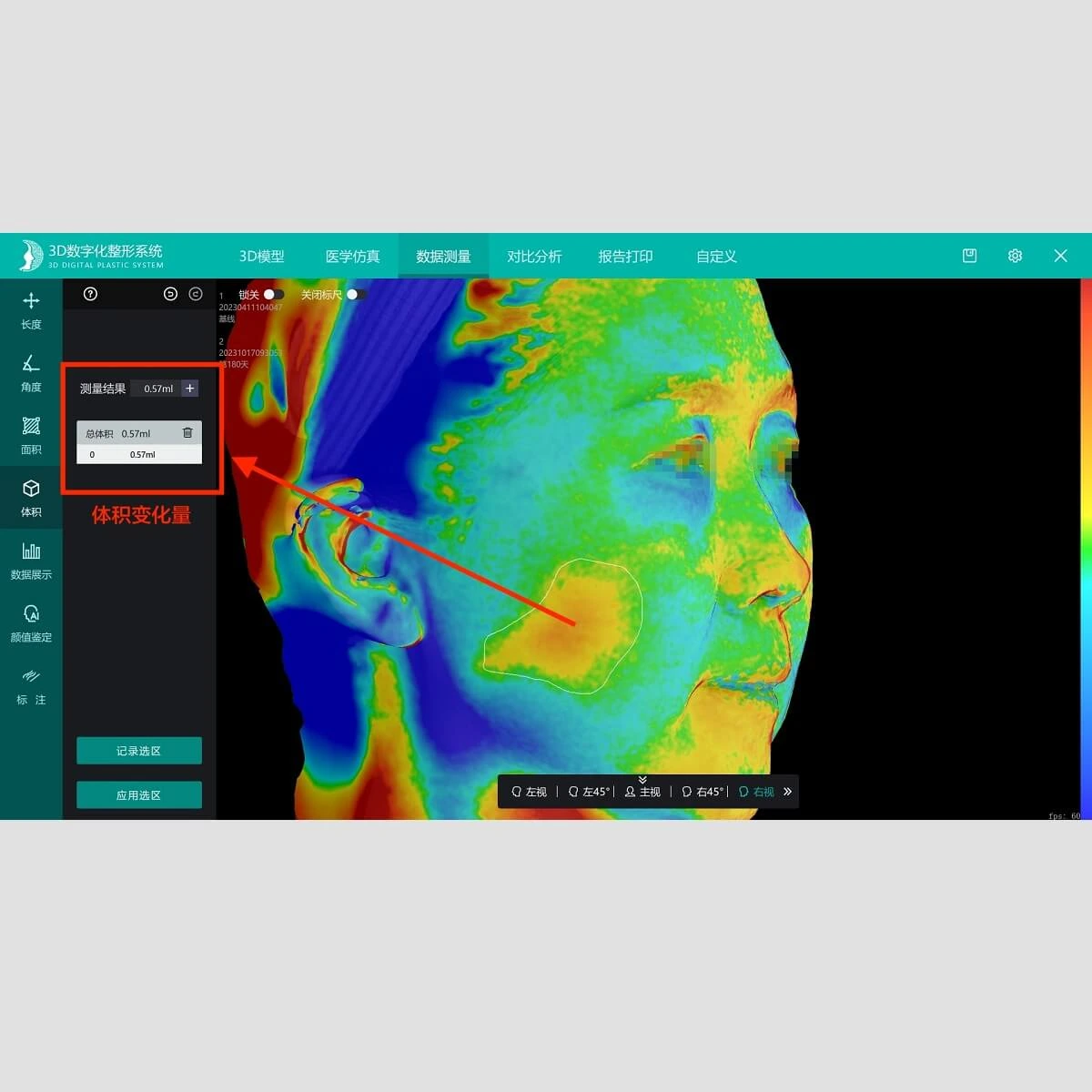
Select a treatment region on the pre-treatment model. The system maps it to the corresponding post-treatment area for volume comparison.
Compare the same treatment region across multiple time points. The system remembers the selected area and maps it to each model for area and volume measurements, supporting consistent assessment over time.
Automatically register models and align them to standard multi-angle views. Compare models in different modes, including grayscale and lit views, to review treatment-related changes.

Frequently Asked Questions
3D quantitative assessment uses 3D scanning devices to capture facial 3D data. Through multi-dimensional 3D difference comparison, it objectively and numerically evaluates morphology, volume and height before and after treatment, helping reduce variation from experience-based subjective judgement and improve reproducibility without replacing professional judgement.
Taking the MVS-P6 as an example, it combines high-frequency coded structured light with 72-megapixel imaging, achieving ±0.05mm measurement accuracy, ±0.05ml volumetric accuracy and 0.02mm repeatability, meeting research-grade quantitative assessment requirements.
It suits public institutions, research institutes and medical aesthetics institutions conducting clinical research, for validating injection outcomes, comparative procedure research and standardized data collection.
Based on a standardized capture workflow and proprietary core algorithms, the system automatically registers models and computes 3D differences, reducing manual measurement variation and outputting reproducible, objective quantitative data.
Yes. The system supports export in OBJ, STL and PLY standard formats plus quantitative reports, and can connect with research analysis software to support clinical case studies and academic paper data.
The recommended configuration is the CASZM MVS-P6 ultra-high-precision flagship 3D facial scanner with a data analysis workstation and accompanying quantitative software to complete the full preoperative and postoperative quantitative assessment workflow.
